
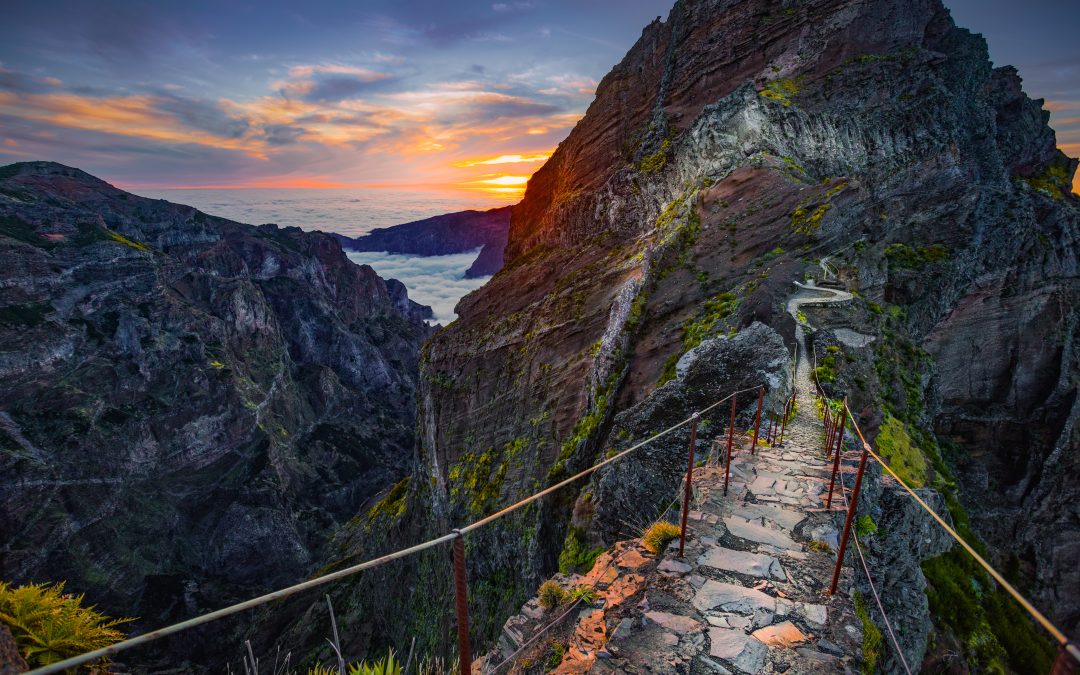
Funchal may be the heart of Madeira, but it is only the beginning of the island’s story. Beyond the capital’s harbor promenades, historic wine lodges, and colorful markets lies a Madeira that feels quieter, wilder, and deeply rooted in tradition. This is an island where dramatic cliffs hide fishing villages untouched by time, ancient footpaths wind through misty mountains, and coastal roads reveal landscapes that feel almost cinematic. To truly understand Madeira, you must venture beyond Funchal—and when you do, the island reveals its most unforgettable secrets.
Madeira’s magic lies in its contrasts. Within a short drive, you can move from subtropical gardens to rugged volcanic coastlines, from cloud-covered peaks to sunlit villages perched above the Atlantic. These lesser-known corners offer travelers a more intimate connection with the island’s culture, nature, and way of life.
Câmara de Lobos: A Fishing Village with Soul
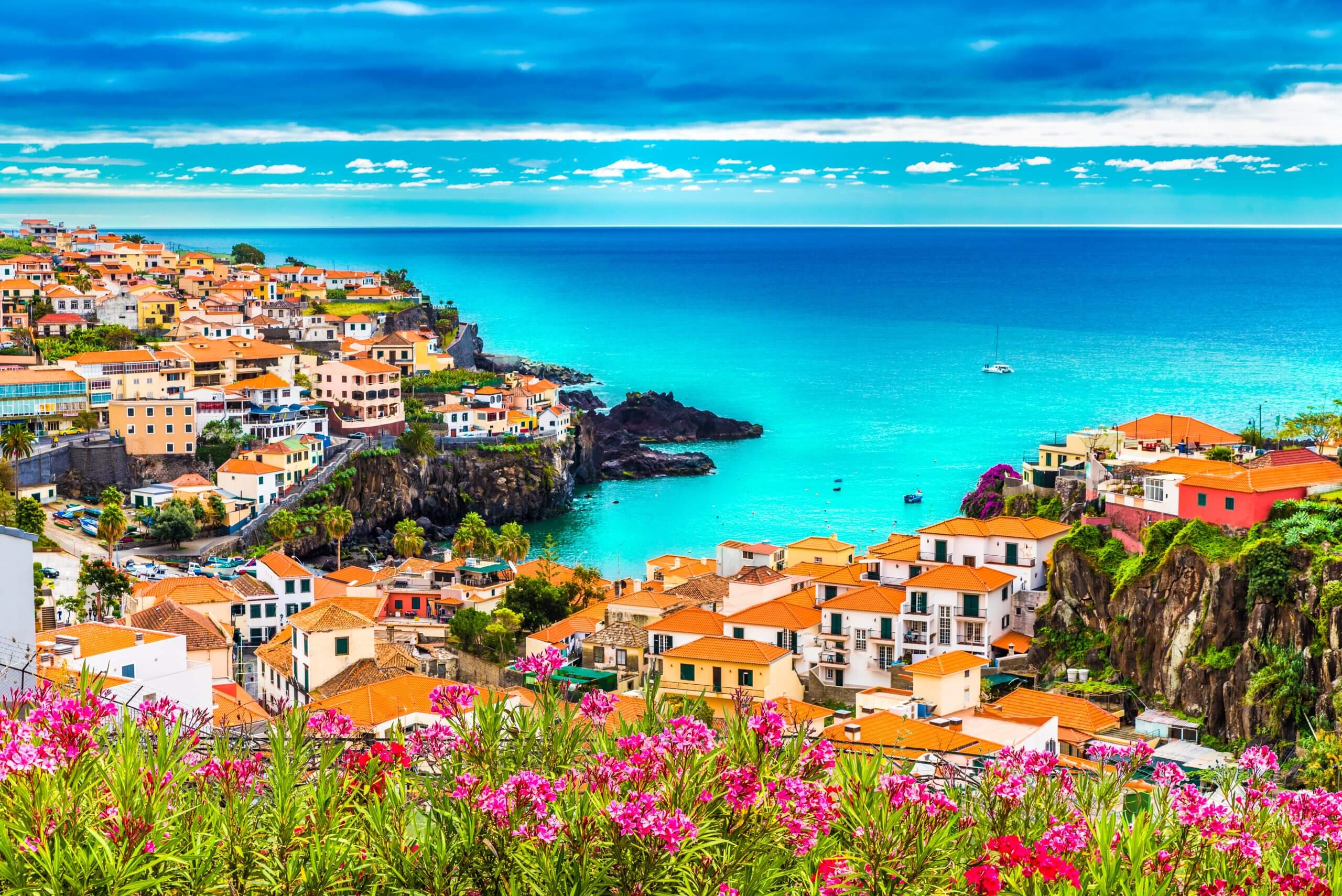
Just west of Funchal lies Câmara de Lobos, a village that perfectly captures Madeira’s maritime spirit. Colorful fishing boats bob gently in the harbor, while locals gather along the waterfront cafés to sip poncha, the island’s signature sugarcane spirit mixed with citrus and honey. It was here that Winston Churchill once set up his easel, inspired by the village’s light and scenery.
Despite its proximity to the capital, Câmara de Lobos feels refreshingly local. Fishermen still mend their nets by hand, and the daily rhythm of the village follows the tides rather than the clock. Climb the hills above the harbor and you’ll find terraced vineyards producing Madeira’s distinctive wines, along with sweeping views of Cabo Girão, one of Europe’s highest sea cliffs.
Câmara de Lobos is best experienced slowly—linger over a seafood lunch, wander the narrow streets, and watch the Atlantic change color as the sun shifts.
Curral das Freiras: A Valley Hidden in the Clouds
One of Madeira’s most dramatic landscapes lies inland, tucked deep within a volcanic crater. Curral das Freiras, or “Nun’s Valley,” is surrounded by towering peaks that feel almost protective, creating a sense of isolation that has shaped the village’s history and character.
For centuries, this remote valley served as a refuge from pirate attacks along the coast. Today, it remains a place where traditions run deep. Chestnuts are a staple here, featured in everything from soups to desserts and liqueurs. Visiting in autumn, when chestnut festivals fill the village with music and food stalls, offers a glimpse into Madeira’s seasonal rhythms.
The drive into Curral das Freiras is an experience in itself, with hairpin turns revealing breathtaking views at every bend. From the viewpoint at Eira do Serrado, the village appears almost unreal—a scattering of white buildings far below, framed by jagged green peaks.
Santana: Where Tradition Lives On
On Madeira’s northern coast, Santana is instantly recognizable for its traditional A-frame houses with steep thatched roofs. Once common across the island, these charming structures are now carefully preserved here, offering a window into Madeira’s rural past.
But Santana is more than a postcard image. It is a gateway to some of the island’s most dramatic natural landscapes, including dense laurel forests protected as a UNESCO World Heritage Site. These ancient forests, remnants of prehistoric Europe, are a haven for hikers and nature lovers.
The northern coast itself feels wilder than the south, with waves crashing against black volcanic rocks and mist often clinging to the hillsides. Santana’s slower pace and strong connection to agriculture and craftsmanship make it a rewarding stop for travelers seeking authenticity.
Porto Moniz: Nature’s Swimming Pools
At Madeira’s northwestern tip lies Porto Moniz, famous for its natural volcanic swimming pools carved by centuries of ocean waves. Fed directly by the Atlantic, these pools offer a refreshing and unforgettable way to experience the island’s raw coastline.
While Porto Moniz draws visitors for its pools, the surrounding area deserves equal attention. The coastline here is rugged and untamed, with cliffs plunging into deep blue waters and roads that feel carved straight from the rock. Inland, small farming communities cling to the slopes, cultivating bananas, sweet potatoes, and vineyards in improbably steep terraces.
Visiting Porto Moniz at sunset, when the pools reflect the changing sky and the crowds thin out, is one of Madeira’s quiet pleasures.
Seixal and the North Coast’s Black-Sand Beauty
Just east of Porto Moniz, the village of Seixal offers one of Madeira’s rare black-sand beaches. Backed by lush green cliffs and waterfalls that spill down the mountainside, Praia do Seixal feels almost tropical—yet unmistakably volcanic.
The north coast as a whole has a distinctly different atmosphere from the sunnier south. Here, the ocean is more dramatic, the landscapes greener, and the villages more secluded. Small chapels, stone houses, and roadside viewpoints dot the coastline, inviting spontaneous stops and unhurried exploration.
For travelers willing to stray from the main routes, the north coast delivers some of Madeira’s most memorable scenery.
Paul do Mar and Jardim do Mar: Coastal Villages Frozen in Time
On the southwest coast, the villages of Paul do Mar and Jardim do Mar feel like echoes from another era. Once accessible only by boat or steep mountain paths, these communities developed a strong sense of independence and resilience.
Today, narrow lanes wind between whitewashed houses adorned with bougainvillea, while waves crash dramatically against the sea walls. Jardim do Mar, in particular, is beloved by surfers drawn to its powerful breaks—but even without a surfboard, the village’s atmosphere is captivating.
These villages are ideal places to disconnect, enjoy fresh seafood, and experience Madeira at its most elemental.
Ponta de São Lourenço: Madeira’s Wild Edge
At Madeira’s easternmost point, the landscape changes dramatically. Ponta de São Lourenço is dry, windswept, and starkly beautiful, with rust-colored cliffs and sweeping ocean views stretching toward the horizon.
Hiking here feels almost otherworldly, especially compared to the island’s lush interior. The trails offer panoramic vistas of the Atlantic, neighboring islands, and sheer cliffs plunging into turquoise waters. It’s a reminder of Madeira’s volcanic origins and the powerful forces that shaped it.
This is Madeira stripped down to its raw essentials—a place where sky, sea, and stone dominate.
Why Beyond Funchal Matters
Exploring beyond Funchal transforms a Madeira holiday into something deeper. These villages and coastal corners reveal the island’s resilience, creativity, and enduring connection to nature. They offer encounters with locals who still live by the rhythms of the land and sea, and landscapes that feel untouched by mass tourism.
For second-time visitors, or travelers seeking meaningful experiences rather than checklists, this side of Madeira is irresistible. It’s found in quiet conversations over poncha, in the scent of eucalyptus along a levada trail, and in the silence of a mountain valley wrapped in mist.
Beyond Funchal, Madeira reveals its true character—not as a destination to be rushed through, but as an island to be felt, savored, and returned to again and again.


Call Us
+1 877 666 3113
Email Us
letsgo@skyvacations.net